


Introduction-
Consider the recent occasion when somebody failed you. Perhaps they broke a promise, told you a half-truth, or even were absent when you needed them most. Remember that feeling? The lack of trustworthiness is painful because trust acts as the invisible cable that binds all significant relationships together.
Trustworthiness does not simply imply being a trustworthy person. It is being a person whom others can rely on in times when everything is in doubt. There is a significant discrepancy between our actions and our words, between who we claim to be and who we actually become daily.
Trustworthy behavior is not a quality that people are born with or gifted; it is built. And in a world where faithless promises are nearly a way of life, being trustworthy is one of the strongest choices one could make.
The Truth about Trustworthiness
We can eliminate all the fancy jargon and examine the true essence of what trustworthiness really entails in everyday life.
What you say and do go hand in hand
Reliable individuals do not possess two sides of self-image, the one that is projected to others and the one that is reserved. What they believe, they do. What they promise, they deliver. There’s no gap between the person they claim to be and the person they are when no one’s watching. This consistency isn’t about perfection; it’s about integrity. When you mess up (and you will), you own it. You don’t make excuses or shift blame. You say, “I was wrong,” and you work to make it right.
You Show Up, Especially When It’s Hard
Anyone can be there for the celebrations. Trustworthy people show up for the hard parts too—the 2 AM emergencies, the uncomfortable conversations, the moments when staying would be easier than leaving but leaving would be easier than staying. Reliability isn’t about being available all the time; it’s about being there when it truly matters. It means your “yes” actually means yes, and your “I’ll be there” isn’t just something you say to end a conversation.
You Tell the Truth, Even When It Costs You
Here’s where it gets tough. Trustworthiness means choosing honesty over comfort. It means delivering bad news instead of hiding it. It means admitting “I don’t know” instead of pretending you have all the answers. It means having the difficult conversation today rather than letting someone discover your deception tomorrow. The truth might sting in the moment, but lies create wounds that never fully heal.
You Protect What Others Share With You
When someone trusts you with their story, their struggle, or their secret, you guard it. You don’t share it for laughs, leverage, or even to make yourself look good. Trustworthy people understand that being trusted with someone’s vulnerability is a privilege, not gossip material. This discretion creates safe spaces where real connection can happen.
You Care Enough to Consider Others
Trustworthiness without empathy is just cold reliability. Truly trustworthy people try to understand how their actions affect others. They ask themselves, “How would I feel if someone did this to me?” This doesn’t mean you can please everyone or avoid ever disappointing someone. It means you think beyond yourself, recognizing that your choices ripple outward into other people’s lives.
“Rebuilding Trust: The Bridge That United Millbrook”
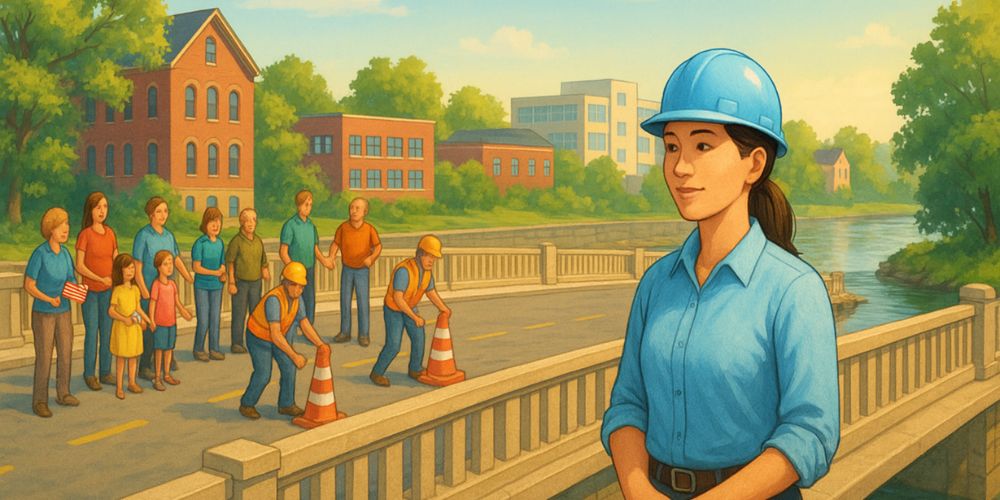
The Problem
The bridge had been there longer than anyone could remember. It connected the old part of Millbrook to the new developments across the river—the schools, the hospital, the places people needed to reach every single day. But after decades of heavy use and deferred maintenance, the bridge was failing.
It started with small cracks in the concrete. Then the rust spreading across the support beams. Then the way it shuddered when trucks passed over it. Engineers had posted weight limits, but everyone knew the truth: it was only a matter of time.
Mayor Sandra Chen stood before a room full of worried citizens at the emergency town hall. “We need to repair this bridge, and we need someone to lead the project. Someone we can trust with our safety, our money, and our future.”
Silence filled the room. The last big infrastructure project had gone over budget by forty percent and taken three years longer than promised. The contractor had blamed weather, supply chains, and bad luck. The town had been left with debt and broken trust.
“Who’s going to take this on?” someone shouted from the back. “So they can disappoint us again?”
That’s when Maya stood up.
The Unlikely Choice
Maya was thirty-two, a structural engineer who’d moved to Millbrook just eighteen months earlier. She ran a small engineering firm from a converted storefront downtown. Most people knew her as the quiet woman who bought coffee at the same café every morning and sometimes volunteered to tutor math at the high school.
“I’ll do it,” she said simply.
The room erupted. Who was she? What major projects had she completed? Why should they trust someone they barely knew?
Maya didn’t raise her voice. She waited for the noise to die down. “You don’t know me well enough to trust me yet,” she said. “That’s fair. But I know this town relies on that bridge. I know families are taking longer routes to get their kids to school safely. I know ambulances are being delayed. And I know you’ve been let down before.” She paused. “I can’t promise perfection. But I can promise honesty, constant communication, and that I’ll treat your money and your safety like it’s my own family depending on it.”
Mayor Chen looked at her carefully. “You understand if this goes wrong, your reputation here is finished?”
“I understand,” Maya said. “But I also understand that if I don’t try, someone might get hurt when that bridge fails. That matters more than my reputation.”
Something in her directness cut through the skepticism. The vote was close, but Maya got the project.
When Trust Is Tested
Maya started with a promise: complete transparency. She created a website where anyone could see the budget, the timeline, and the daily progress. Every Wednesday evening, she held an open session at the library where people could ask questions—any questions.
The first session drew twelve people. The second drew three. But Maya showed up every single week anyway.
Two months in, they discovered the damage was worse than expected. The foundation itself was compromised. The repair cost would jump by thirty-five percent.
Maya could have hidden this. She could have juggled the numbers, used the contingency fund quietly, maybe even cut corners on less visible parts of the project. Instead, she called an emergency meeting.
“I have bad news,” she told the packed room. “The bridge is in worse shape than our initial inspections showed. The previous assessments missed foundation damage that we discovered when we started work. Fixing it properly means spending more money and taking more time.”
The anger was immediate. “This is exactly what happened last time!” someone shouted. “You said you’d be honest, and here we are, asking for more money!”
Maya didn’t deflect. “You’re right to be angry. But I’m telling you now, not six months from now when we’ve run out of money. And I’m giving you a choice: we can do this right, which costs more, or we can do a surface repair that looks good but won’t last five years. I won’t do the second option, even if you vote for it. If that’s what you want, you’ll need a different engineer.”
The room went quiet. This wasn’t what they expected.
“I’m also reducing my fee by twenty percent,” Maya continued. “Not because the extra cost is my fault—it isn’t. But because I want you to know I’m in this with you, not extracting from you.”
When Actions Speak
Word of Maya’s honesty spread. A concrete supplier in the next county offered materials at cost. A retired engineer called Maya and offered to consult for free, saying he’d “never seen someone put integrity above their contract.” Local businesses started a fund to help cover the additional cost. Even the people who had voted against hiring Maya began showing up to the Wednesday meetings.
The project had its setbacks. A crucial shipment was delayed. A winter storm pushed the timeline back three weeks. Each time, Maya told people immediately, explained what it meant, and laid out the options.
She also did something unexpected: she admitted when she was wrong. When a scheduling decision she made caused unnecessary delays, she didn’t blame her team or circumstances. She said, “I made a call that seemed right at the time but wasn’t. I’m sorry. Here’s what I’m doing to fix it.”
People noticed that Maya never made the same mistake twice. They noticed she arrived at the work site before her crew and left after them. They noticed that when she said “next week,” she meant next week. Not eventually. Not when it was convenient. Next week.
The Wednesday meetings grew. Twenty people. Forty people. Parents brought their kids to watch the progress. Teachers made the bridge project part of their civics lessons. It became more than infrastructure—it became a symbol of what happens when someone refuses to let a community down.
The Completion
Fourteen months after Maya started—two months ahead of her revised schedule—the bridge reopened.
There was no ribbon cutting ceremony, no grand speeches. Maya had quietly finished the work, had it inspected by independent engineers, and submitted the final reports. The bridge was safe. The budget had come in three percent under the revised estimate.
At the celebration the town organized, Maya stood uncomfortably in the spotlight. “I just did my job,” she said.
But an elderly woman named Ruth stepped forward. “No,” she said firmly. “You did more than that. You showed us what it looks like when someone means what they say. My grandkids can walk to school safely now because you refused to cut corners. Because when things got hard, you didn’t run or lie or make excuses. You stayed and you told us the truth.”
Ruth’s voice cracked. “You gave us something more valuable than a bridge. You gave us back our ability to trust.”
Maya’s story did something unexpected. Young engineers from across the state reached out, wanting to work with her. Not because she’d completed a bridge, but because of how she’d completed it. Parents in Millbrook began telling their children, “Be like Maya. Say what you mean. Mean what you say. Show up when it’s hard.”
The bridge still stands. But what it represents—that trust can be rebuilt, that integrity still matters, that keeping your word is its own reward—stands even taller.
Conclusion: Building Your Own Bridge
Here’s what Maya’s story teaches us: trustworthiness isn’t about grand gestures or perfect execution. It’s about consistent choices that prove your character over time.
You build trustworthiness the same way Maya rebuilt that bridge—one honest conversation at a time, one kept promise at a time, one moment of choosing integrity over convenience at a time.
Start Small, Start Now
You don’t need a major project to practice trustworthiness. Start with what’s in front of you:
- When you tell someone you’ll call them back, call them back.
- When you borrow something, return it in better condition than you received it.
- When you’re wrong, say so without excusing it.
- When someone confides in you, protect their words like treasure.
- When you commit to being somewhere, be there—on time and fully present.
Understand the Cost
Being trustworthy will cost you. It will cost you opportunities that require you to compromise your values. It will cost you relationships with people who want you to be someone you’re not. It will cost you the easy way out when the hard way is right.
But here’s what you gain: you’ll sleep well at night. You’ll be able to look at yourself in the mirror without flinching. People will know that your word means something. And when you need someone to trust you with something that truly matters, they will.
Know That One Person Can Make a Difference
We live in cynical times. It’s easy to think trustworthiness doesn’t matter anymore, that everyone lies and cuts corners, so why shouldn’t you?
But Maya proved something essential: in a world full of broken promises, being someone who keeps their word makes you unforgettable. When everyone else is looking for shortcuts, your integrity becomes magnetic. When trust is scarce, becoming trustworthy makes you invaluable.
Your Choice, Every Day
Every morning, you wake up and choose what kind of person you’ll be that day. Will you be someone people can count on? Will you tell the truth even when it’s uncomfortable? Will you show up when it’s hard?
These choices seem small in the moment. But over time, they build something permanent—a reputation, yes, but more importantly, a character. They build you into someone who can look back on your life without regret, someone who helped others believe that trust is still possible.
The bridge Maya built will eventually need repairs again. All structures do. But the trust she built? That foundation is permanent. It changed how a town saw what was possible. It inspired others to demand more from themselves.
That’s the real power of trustworthiness. It doesn’t just improve your life—it gives others permission to believe that integrity still matters, that character still counts, that one person keeping their word can inspire hundreds of others to do the same.
So build your bridge. Keep your promises. Tell the truth. Show up when it matters. Be someone others can count on when everything else feels uncertain.
The world has enough people who talk. It desperately needs more people who do what they say they’ll do.
Be one of them.

Author: mkalam
Educator and content creator