Drama

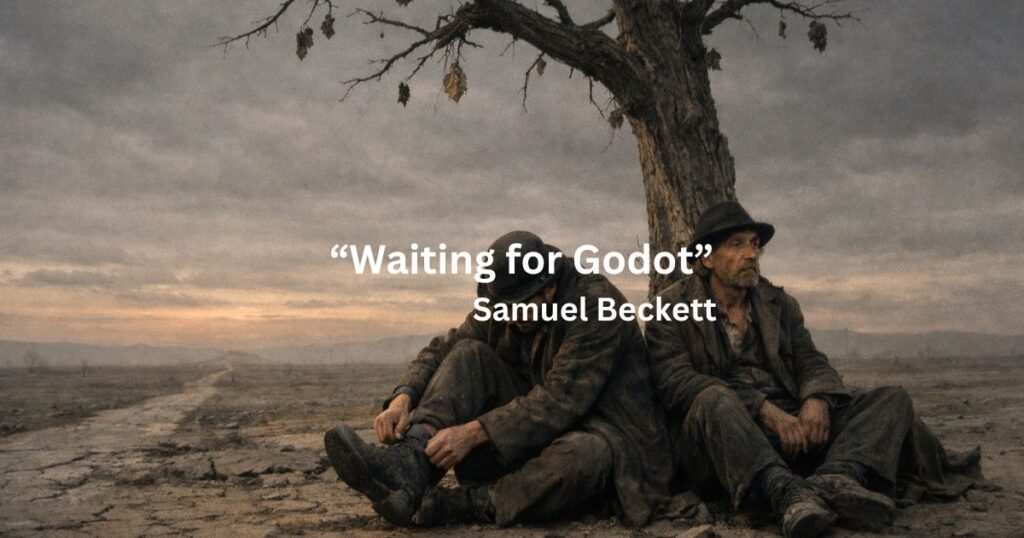
“WAITING FOR GODOT” ANALYSIS: CHARACTERS, SYMBOLS & EXISTENTIAL INSIGHTS

Two tramps wait endlessly under a barren tree for the elusive Godot, trapped in repetitive banter and futile rituals that expose life’s absurd meaninglessness. Samuel Beckett’s tragicomedy blends dark humor with existential despair, challenging us to confront hope’s cruelty and time’s stagnation. This student guide unpacks plot, characters, symbols, and modern relevance—proving why the play still haunts our scroll-trap world.

“WAITING FOR GODOT” ANALYSIS: CHARACTERS, SYMBOLS & EXISTENTIAL INSIGHTS Read More »

‘A DOLL’S HOUSE’ EXPLAINED: PLOT, CHARACTERS, AND FEMINIST THEMES IN IBSEN’S PLAY

This in-depth study guide to Henrik Ibsen’s A Doll’s House takes you inside Nora Helmer’s seemingly perfect Christmas home to reveal the secrets, lies, and power imbalances that shatter her “doll” marriage. Moving act by act, it unpacks the plot, character arcs, symbols, and feminist themes that made Nora’s final door slam one of the most shocking moments in theatre history. Ideal for students, teachers, and literature lovers, the article shows how Ibsen’s realist drama still challenges modern audiences to question gender roles, identity, freedom, and what it really means to live authentically.

‘A DOLL’S HOUSE’ EXPLAINED: PLOT, CHARACTERS, AND FEMINIST THEMES IN IBSEN’S PLAY Read More »

The Way of the World

THE WAY OF THE WORLD: A TIMELESS COMEDY OF MANNERS

William Congreve’s “The Way of the World” is a sparkling Restoration comedy where love, money, and manipulation collide in a world of sharp wit and dangerous secrets. At its heart is the unconventional romance between Mirabell and Millamant, two brilliant minds who outsmart greedy schemers and negotiate a surprisingly modern, equal marriage on their own terms. Packed with satire, intrigue, and rapid-fire dialogue, the play exposes how people perform, deceive, and still manage to find genuine connection in a society obsessed with appearances and fortune.

THE WAY OF THE WORLD: A TIMELESS COMEDY OF MANNERS Read More »

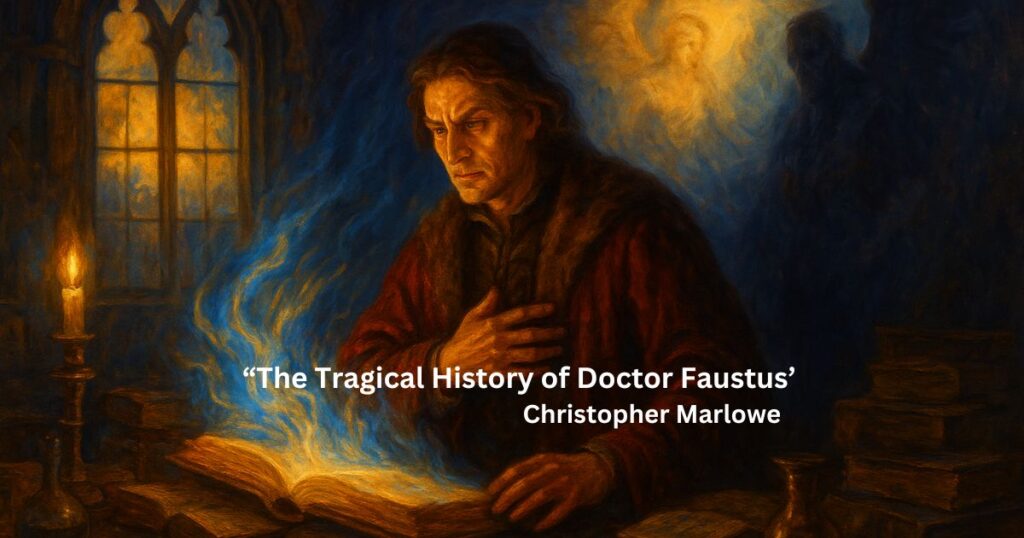
“The Tragic Story of Doctor Faustus Explained Simply”

Introduction- The Tragical History of Doctor Faustus by Christopher Marlowe is also among the most powerful and thought-provoking plays of the Elizabethan period. The next passage gives an in-depth analysis of this classic tragedy, in which a very successful scholar, Doctor Faustus, is seeking endless knowledge and power, and he makes a deadly agreement with

“The Tragic Story of Doctor Faustus Explained Simply” Read More »

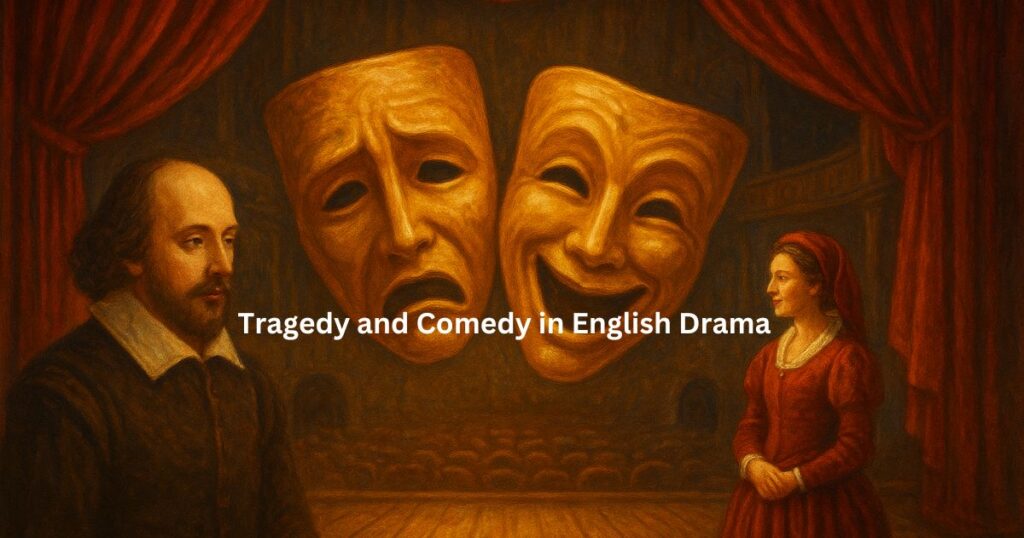
The Evolution of Tragedy and Comedy in English Literature

Introduction- Welcome to an exploration of two forces that have shaped English drama for centuries: tragedy and comedy. These aren’t just theatrical categories—they’re mirrors held up to human nature itself. Tragedy shows us noble characters brought low by their own flaws or the cruelty of fate, making us feel both pity and fear. Comedy, meanwhile,

The Evolution of Tragedy and Comedy in English Literature Read More »

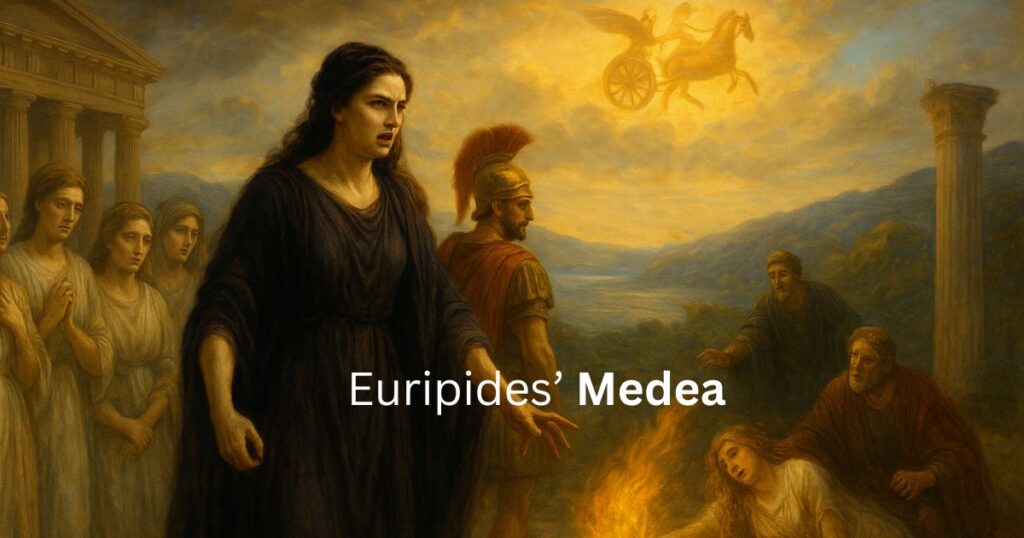
Medea’s Revenge: Euripides’ Timeless Tragic Tale

Introduction- Euripides’ Greek tragedy Medea, performed in 431 BCE, is a profoundly poignant examination of the mind of Medea, a woman who sacrifices everything for her husband, Jason, only to be deceived when he leaves her for a marriage that benefits him politically. Medea’s deliberate act of retaliation questions social mores as well as the

Medea’s Revenge: Euripides’ Timeless Tragic Tale Read More »