

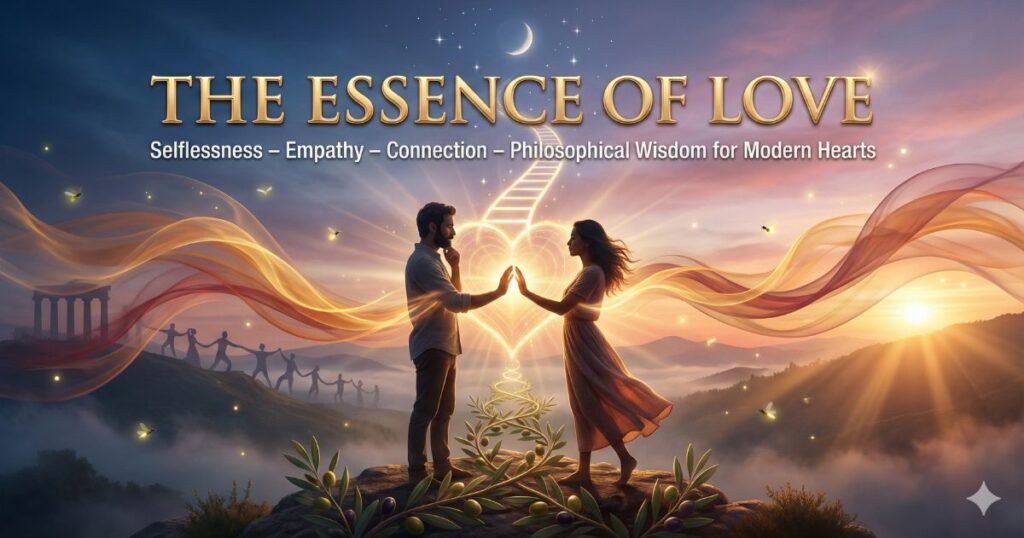
What Love Really Means
Love is a profound human experience that transcends simple definitions, blending emotions, actions, and understanding. It is both mysterious and universal, a force that connects us while allowing each person to encounter it uniquely. At its core, it becomes the purest expression of selflessness, empathy, and connection. Love acts as a bridge between isolation and unity, inspiring, healing, and transforming the lives it touches.
Philosophers, poets, and thinkers throughout history have endeavored to capture the essence of love. Plato viewed love as a desire for beauty and truth, a longing that propels the soul toward greater understanding and fulfillment. For him, the love that may begin with physical attraction can lead us to appreciate higher realities such as justice, wisdom, and goodness. Aristotle, on the other hand, interpreted love as a mutual relationship in which one seeks the well-being and happiness of another as much as one’s own. This conception of love as a reciprocal bond of goodwill highlights its nature as an ethical virtue rather than merely an emotion. Still, a deliberate choice and an act of will that requires commitment and effort.
From a more contemporary perspective, Erich Fromm, in “The Art of Loving,” describes love as an active power that breaks through the walls separating us, enabling us to relate to one another genuinely and deeply. In this view, love is an art that demands practice, patience, and discipline.
True love is a synthesis of passion, intimacy, and commitment. It is passionate yet not consuming, intimate yet respectful of individuality, committed yet free of possessiveness. In this delicate balance of freedom and unity, two individuals come together not to complete each other, but to support and enrich each other’s journey.
Love is compassionate and forgiving, seeing beyond imperfections and embracing the whole of another person’s being. It is the quiet strength of loyalty, the steady presence in adversity, and the courage to be vulnerable—to sharing one’s deepest fears and dreams and to trust the bond that weaves two lives together.
Love also has the power to transform both individuals and societies. It can act as a catalyst for creativity, inspiring works of art, music, and literature. It fosters empathy and cooperation, forming the foundation of communities and civilizations grounded in mutual respect. Love motivates acts of kindness and generosity that move beyond self-interest and open the way to peace and harmony.
In the realm of personal growth, love encourages self-discovery and self-improvement. It challenges us to confront our flaws and insecurities, urging us to become better versions of ourselves for the sake of those we cherish. In loving others, we learn patience, sacrifice, and resilience. We come to realize that true love is not about possession but liberation, not about taking but giving. When we love in this way, we not only enrich the lives of others but also discover a deeper, more grounded sense of who we are.

The Legend of Kindred Hearts
In a tranquil village nestled between emerald hills and whispering forests, Arjun, a young man with a bright mind and boundless curiosity, feels a persistent ache of loneliness. Though admired for his intelligence, he struggles to find genuine connections amid the routine exchanges of daily life. One afternoon, drawn by a sense of adventure tinged with melancholy, Arjun discovers an old library abandoned at the village’s edge, its shelves thick with dust and forgotten tales.
Captivated by the hidden stories, Arjun pours himself into restoring the library. Among tales of bravery and passion, he is especially moved by the legend of Satyam, a sage from centuries past who transformed his community through wisdom and unconditional kindness. Satyam’s philosophy of love’s transformative power resonates deeply with Arjun, awakening in him both aspiration and purpose.
Determined to emulate Satyam’s legacy, Arjun seeks out ways to bring compassion into his world. He begins volunteering at the orphanage, delighting in the children’s laughter and finding comfort in their companionship. He visits elders, listening intently as they recount memories both joyous and painful; he offers empathy without judgment. Gradually, these acts become more than gestures; they become Arjun’s way of life.
As word spreads of Arjun’s selflessness and warmth, a subtle shift takes root within the village: neighbors grow kinder, strangers exchange smiles, and fractured families draw closer together. Arjun watches as people who once passed each other in silence now linger in doorways to share food and stories, and he realizes the village is becoming the community he once only dreamed of. Just as hope blossoms anew, disaster strikes: a furious storm batters the village, flattening crops and tearing roofs from homes. Despair threatens to unravel what little unity remains.
In this moment of crisis, Arjun rises to lead—not as a hero above others, but as one among many. He organizes rescue teams for those trapped by debris, comforts bereaved families through sleepless nights and inspires others to give what they can—food, shelter, labor—to rebuild together. Rain seeps through the library’s cracked roof, dripping onto open pages as villagers huddle inside for shelter, and Arjun refuses to let this sanctuary fall to ruin again.
The villagers work side by side under Arjun’s steady guidance. Through shared hardship and mutual support fostered by his example, their bonds strengthened beyond anything they had known before. Many who once kept to themselves or harbored grievances now open their hearts not just out of necessity, but from a newfound love for one another.
Months later, as fields sprout green again and roofs rise where ruins once stood, Arjun stands quietly in the restored library, its shelves now bustling with visitors drawn not only by books but also by each other’s company. The isolation that once shadowed his life has given way to a connection deeper than he had ever dreamed possible. Arjun realizes that Satyam’s teachings were never meant for study alone, but for living: real love is found not in grand philosophies, but in small acts of kindness offered each day. Convinced that compassion is its own reward—and that it can transform any heart willing to embrace it—Arjun continues quietly shaping his village, one act of love at a time.
Your Love Action Plan
Arjun proves love is an active choice, braver in storms than selfishness. Start today—no crisis needed. Build your practice with these daily challenges:
- Express gratitude: Text a friend or family member one specific thing you appreciate about them.
- Listen deeply: In your next conversation, ask a question and listen without interrupting or advising.
- Serve selflessly: Perform one small act of kindness for a stranger, like holding a door or offering a sincere compliment.